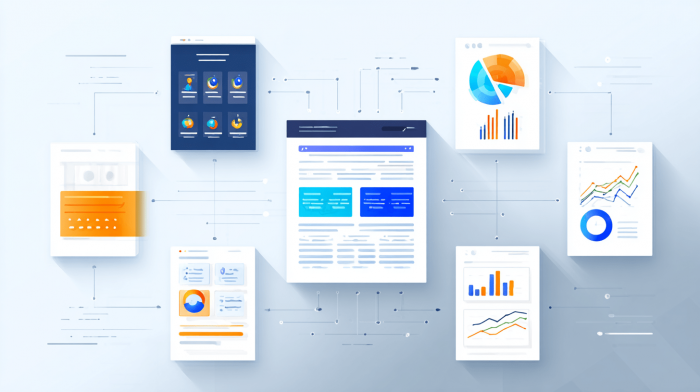




When working on attracting customers and growing a business, an owner has to choose between different advertising platforms. The most commonly used ones are Google Ads and Facebook Ads, which are based on different principles of audience engagement. The former responds to existing demand, while the latter generates it through visual stimuli and precise segmentation. These different approaches directly affect the format of ad delivery, the logic of reach, and the nature of interaction with potential customers, requiring a particularly careful choice of the optimal solution. So let’s explore what works better for business – Google Ads or Facebook Ads – and examine when to use each channel independently and when to combine them within a unified strategy.

Specifics and characteristics of each system
Google Ads operates in an environment where users formulate their own queries, expecting to find specific solutions. In this context, advertising is not imposed – it responds to an existing need, aligning with the logic of search and behavioral patterns. The decisive factor here is not the exact match of keywords but the ability of the ad to blend into the overall structure of the query, evoking trust and interest even before the user visits the website. This format works well for business categories where choices are made consciously and based on comparisons, so we recommend reading the QuatroIT blog, where each of these issues is explored in detail.
Facebook Ads, by contrast, initiates contact instead of responding to a query. It integrates ads into the feed as part of the everyday information flow. What draws attention here is not the match to a search intent but the strength of the visual message, the relevance of the creative, and the precision of segmentation that considers user interests, behavior, and context. This makes it possible to reach a broader audience early on – users who haven’t yet formed a specific intent but already show signs of potential interest. This approach enables more opportunities to engage at different stages of the user journey, though it requires a different budgeting logic and more flexible expectations about results.
Key differences between Google Ads and Facebook Ads in action
When handling comprehensive digital marketing, we always explain to clients the key functional differences between Google and Facebook. Only with a clear understanding of these distinctions can one build a consistent promotion strategy, where every tool operates in sync to deliver a predictable and measurable result.
| Approaches to reach and placement formats. | Google campaigns span search, YouTube, and various digital platforms, ensuring visibility at the moment the user is actively looking for a solution. Facebook seamlessly embeds ads into Instagram and other social media feeds, boosting reach through visuals and repeated brand exposure. |
| Depth of settings and segmentation capabilities. | Facebook targeting enables detailed audience segmentation by interests, behavior, and demographics. Google, on the other hand, focuses on the precision of keywords and user intent, with highly flexible settings to reach the right customer. |
| Scenarios for audience interaction. | Google’s optimization focuses on achieving target CPC, conversions, or CTR, allowing for fast testing of different ad versions. Facebook provides more scenarios for integrated promotion and impulse-based engagement, gradually building trust in the brand. |
| Campaign performance analysis tools. | Google’s analytics section offers a complete set of data on click costs, conversions, reach dynamics, and individual campaign statistics. Facebook’s capabilities allow for detailed tracking of audience behavior on social media, with an emphasis on deep visual engagement and repeated interactions. |
| Feature expansion through integrations. | When it comes to integrating third-party digital services, Google offers a robust toolkit for connecting with CRMs, analytics, and customer support systems. Facebook enables campaign integration with Instagram and offers trackers to monitor responses, expanding strategy reach within the social media ecosystem. |
| Budgeting strategies and campaign management. | Flexibility in configuration manifests differently – Google automates budget allocation and bid adjustments in real time based on conversion performance. Facebook allows for dynamic adjustment of promotion according to current segment behavior, reacting to digital statistics without delay. |
What to keep in mind when choosing a promotion strategy
Building an ad strategy goes beyond simply picking a tool. First and foremost, it requires understanding the business logic – how the sales process works, which stages influence customer decisions, and at what point interest is sparked. In simple models, one precise touchpoint may suffice, while in B2B formats the process calls for more consistency and persuasion. Key factors include campaign duration, budget size, audience type, funnel stage, and support from other channels. All of these shape the communication structure – whether it’s direct or multi-step with gradual progression toward conversion.
These factors do not exist in isolation – there’s always a connection between them, which determines how the campaign performs in real-world conditions. A limited budget requires a sharper structure of touchpoints, short timelines demand different prioritization, and an unfamiliar audience raises the bar for persuasion from the very first contact. These nuances gradually form a picture of the interaction rhythm and what the communication should focus on. But even that is not enough for the desired outcome – the moment the ad appears and the emotion it triggers in the audience ultimately makes the biggest difference.

When a business should choose one channel over the other
Search and social media operate differently, so the specific situation determines which channel will produce the expected reaction based on user behavior and decision-making logic, including:
- A well-formed query and readiness to act. In these cases, Google Ads is preferred due to its pull-marketing logic, where ads appear when the query is already formed and the user is ready to take action.
- Local promotion with geotargeting. Facebook Ads offers flexible targeting by location, enabling focused outreach in a limited area and tailoring messaging to the local context.
- Promotion in highly competitive markets. As an SEM tool, Google Ads performs better in saturated environments thanks to precise keyword targeting and ad relevance.
- New offerings for a cold audience. Facebook Ads gradually generates interest through push-marketing, repeated exposure, and visual presentation, making it suitable when demand is not yet established.
- Visual product presentation. For formats where first impressions and emotional perception matter, click-oriented ads in Facebook feeds perform better, with creative assets playing the main role.
- User return via remarketing. Both channels are effective here: Google Ads captures users during search, while Facebook ensures repeated exposure through visual signals. In such scenarios, PPC strategies should be designed with the dynamics of prior interaction in mind.
When to consider using both systems simultaneously
Using Google Ads and Facebook Ads within a unified strategy allows for a combination of different engagement mechanisms, enhancing results at each stage of the user journey. Google Ads targets users who are already in the decision-making phase, focusing on existing demand and specific queries. At this point, ads align with the search logic and reach a highly motivated audience. Meanwhile, Facebook Ads addresses the part of the market that has yet to formulate a clear query but can be drawn in through relevant content, repeated outreach, or consistent communication across platforms.
Combining these channels expands opportunities for analysis and strategy refinement. Data from both systems provides a more complete view of audience behavior, enabling more accurate tracking of demand dynamics and channel-specific ROI. A comprehensive approach helps not only to attract new users but also to re-engage those with prior contact, reinforcing interest at different decision-making stages. At the same time, continuous analytics and fast adaptation to changes help avoid generic solutions, allowing for precise campaign development. This is what ensures stable growth in effectiveness regardless of the audience interaction stage.
Planning to turnkey website creation but unsure which ad channel is more effective? We can help. QuatroIT specialists will thoroughly analyze your niche and business specifics to offer a solution that delivers results without unnecessary budget strain. So don’t wait – get in touch, our team is always at your service!
FAQ: Choosing between Google Ads and Facebook Ads
Which metrics should be analyzed to assess campaign effectiveness?
Ad analytics makes sense when the focus isn’t limited to a single metric but includes key signals reflecting audience response and post-click behavior, such as:
- Cost per click and conversion dynamics over time.
- Audience return frequency across sources.
- Reach of new segments within the target audience.
- Time spent interacting with content after the click.
- Page depth viewed on the website.
Why can site structure affect the stability of ad traffic?
Even minor technical issues can distort analytics and complicate campaign optimization. That’s exactly what the guide on how to create a sitemap.xml for an online store explains – outlining the essential technical solutions that help prevent traffic loss due to indexing or redirection problems.
When can a business be considered ready to scale advertising?
If the campaign delivers stable results, metrics remain within expected ranges, and the system responds predictably to budget changes – it’s a signal that it’s ready to scale. Under such conditions, scaling does not reduce efficiency but rather strengthens it.
Does niche competition affect the choice between Google Ads and Facebook Ads?
In highly competitive niches, search campaigns tend to be more effective because they capture existing queries. In calmer markets, broader reach strategies work better. To better understand the difference in approaches, explore the key distinctions between SEO and contextual advertising, and adapt your strategy to fit current market conditions.
Is it worth launching ads without a dedicated landing page?
In some cases, launching without a landing page is possible, but it reduces control over the interaction process. When users land on general or random content, precision and monitoring of audience engagement drop significantly.